
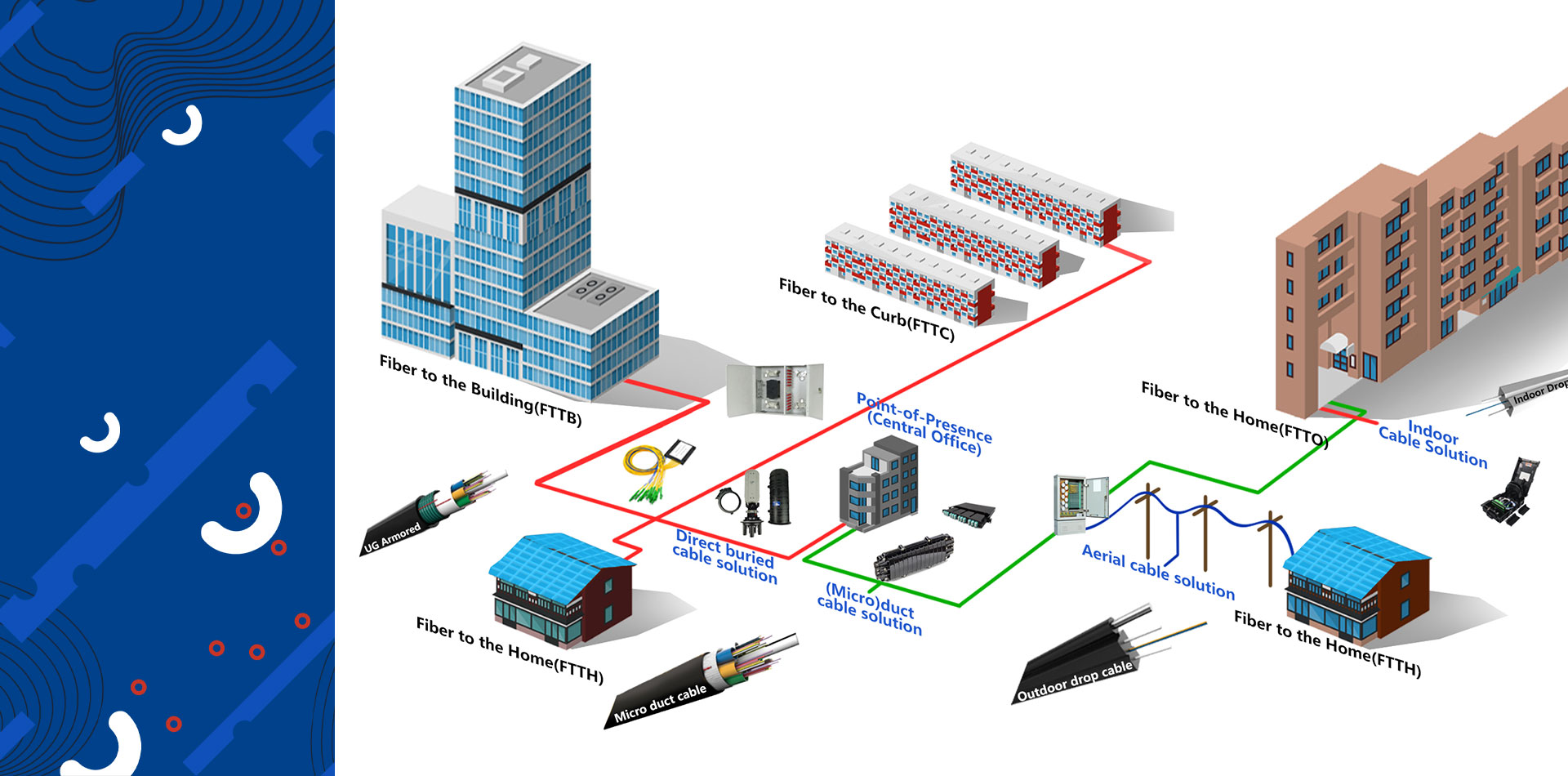
Anti-rodent fiber optic cables are specially designed optical cables that provide additional protection against damage caused by rodents such as rats, mice, squirrels, and other animals that chew cable sheaths.
As fiber optic networks continue to expand across rural areas, forests, highways, railways, and power transmission corridors, rodent-related cable damage has become an important concern for telecom operators, internet service providers (ISPs), EPC contractors, and infrastructure developers.
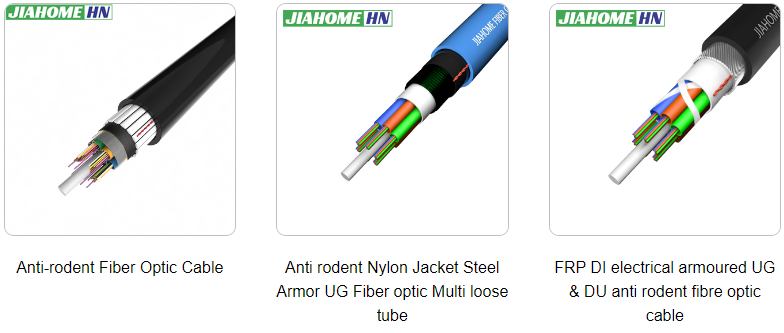
Rodents can chew through conventional cable sheaths and protective layers, eventually reaching the optical fiber core. This may result in fiber breakage, increased optical attenuation, communication interruptions, and costly cable repairs.
To reduce these risks, anti-rodent fiber optic cables incorporate different protection methods, including metallic armor, FRP reinforcement, glass yarn, specialized sheath materials, and chemical deterrents.
The most suitable anti-rodent fiber optic cable depends on the installation environment, rodent activity, required mechanical protection, and project specifications. Understanding the different protection methods is essential for selecting a cable that provides reliable performance throughout its service life.
1. Why Do Fiber Optic Cables Need Anti-Rodent Protection?
Rodents have continuously growing teeth and a natural tendency to gnaw on different materials. Outdoor fiber optic cables may become targets when installed in areas where rodents are active.
Common locations with a higher risk of rodent damage include:
- Forests and woodland areas
- Rural broadband networks
- Underground cable trenches
- Direct-burial communication routes
- Railway and highway infrastructure
- Power transmission corridors
- Industrial facilities and agricultural areas
When rodents damage an optical cable, the consequences may include:
Fiber breakage: Rodents may penetrate the cable sheath and damage optical fibers or fiber units.
Communication interruption: Damaged fibers can interrupt data transmission between network nodes, substations, or communication facilities.
Higher maintenance costs: Repairing damaged cables may require excavation, cable replacement, fiber splicing, and additional labor.
Reduced network reliability: Repeated rodent attacks can shorten the effective service life of optical communication infrastructure.
For these reasons, anti-rodent protection is an important consideration when designing outdoor and underground fiber optic networks.
2. 3 Main Anti-Rodent Protection Methods for Fiber Optic Cable
Anti-rodent fiber optic cables generally use three main protection methods: chemical deterrence, physical stimulation, and armor protection.
Different manufacturers may combine these methods to provide additional protection. We Hunan Jiahome will supply you the best suitable optic cable solution for your project. Consult now.
2.1 Chemical Deterrent Method
The chemical deterrent method involves incorporating rodent-repellent substances into the cable sheath or protective materials.
Some compounds are designed to produce an unpleasant taste or irritation when rodents attempt to chew the cable, discouraging further chewing.
Advantages:
- Can be incorporated into existing cable sheath designs
- May provide additional protection without significantly increasing cable diameter
- Suitable for certain lightweight cable constructions
Limitations:
The long-term effectiveness of chemical deterrents depends on the formulation, sheath material, and environmental conditions.
Some substances may gradually migrate or degrade during prolonged outdoor exposure. Their effectiveness should therefore be verified through appropriate testing.
Chemical deterrents should generally be considered a supplementary protection method rather than the only defense against severe rodent activity.
2.2 Physical Stimulation Method
The physical stimulation method uses materials such as glass yarn or FRP reinforcement to create a difficult-to-chew protective layer.
When rodents bite these materials, the fine glass fibers may produce an unpleasant physical sensation, discouraging continued chewing.
Common materials include:
- Glass yarn
- Glass-fiber reinforced plastic (FRP)
- Fiberglass protective strips
- Fiberglass rods
Advantages:
- Non-metallic construction is possible
- Suitable for applications requiring dielectric cable structures
- Lightweight compared with some metallic armor designs
- Can provide additional mechanical protection
Limitations:
The protection level depends on the material, thickness, density, and cable structure.
Glass-fiber materials may also create handling risks during cable manufacturing and installation. Appropriate personal protective equipment and safe handling procedures should be followed.
FRP and glass yarn are not identical protection methods. FRP generally provides a more rigid structural barrier, while glass yarn forms a fibrous protective layer.
2.3 Armor Protection Method
Armor protection is one of the most widely used methods for manufacturing anti-rodent fiber optic cables.
This method adds a hard protective layer around the cable core, making it more difficult for rodents to penetrate the cable and reach the optical fibers.
Common armor materials include:
- Corrugated steel tape
- Galvanized steel wire
- Stainless steel tape
- FRP armor
Metallic armor is particularly suitable for underground and direct-burial applications where strong physical protection is required.
Non-metallic FRP armor is useful when the cable must maintain an all-dielectric structure.
Advantages:
- Provides a physical barrier against rodent chewing
- Can improve mechanical protection
- Suitable for demanding outdoor environments
- Widely used in underground and direct-burial optical cable designs
For many underground anti-rodent cable applications, armor protection is a practical and reliable solution when the cable structure is properly designed.
3. Main Types of Armored Anti-Rodent Fiber Optic Cable
Armored anti-rodent fiber optic cables are available in different structures according to the installation environment and mechanical requirements.
3.1 Steel Tape Armored Fiber Optic Cable
Steel tape armored optical cable typically uses corrugated or wrapped steel tape around the cable core. A common example is GYTS steel tape armored fiber optic cable.
GYTS cables are widely used in outdoor communication networks because steel tape provides additional mechanical protection and can improve resistance to rodent penetration.
However, steel tape armor has certain limitations.
If rodents damage the outer sheath and expose the steel tape, the exposed metal may gradually corrode in outdoor environments. Once the protective structure is compromised, rodents may continue chewing around the damaged area.
The overlapping edges of steel tape may also create vulnerable points depending on the cable construction.
Therefore, steel tape armored cable can provide useful rodent protection, but its long-term effectiveness depends on the armor design, sheath integrity, and installation environment.
3.2 Steel Wire Armored Fiber Optic Cable
Steel wire armored optical cable uses galvanized steel wires arranged around the cable core instead of relying only on steel tape.
Compared with conventional steel tape armor, steel wire armor can provide a thicker and more substantial metallic protective structure.
The steel wires create a strong physical barrier that makes it more difficult for rodents to penetrate the cable.
Main advantages:
- Strong physical protection against rodent chewing
- High tensile strength in suitable cable designs
- Suitable for demanding underground applications
- Additional mechanical protection for direct-burial routes
Steel wire armored optical cables are particularly suitable for projects where the cable must withstand both rodent attacks and demanding mechanical conditions.
However, steel wire armor generally increases cable weight and may reduce flexibility compared with some steel tape armored designs.
3.3 FRP Armored Anti-Rodent Fiber Optic Cable
FRP armored anti-rodent optical cable uses fiber-reinforced plastic materials to provide a non-metallic protective barrier.
FRP protection may use flat fiberglass strips, rods, or other reinforced structures around the cable core.
This design is suitable for applications where metallic armor is undesirable.
Main advantages:
- Non-metallic and electrically non-conductive
- Resistant to corrosion
- Lightweight compared with many metallic armored designs
- Suitable for certain underground and aerial cable applications
FRP armored cables can be used in environments where electrical insulation is important, including selected power transmission and industrial communication projects.
The actual rodent-resistance performance depends on the FRP structure, material thickness, and cable design.
4. Anti-Rodent Fiber Optic Cable vs. Standard Fiber Optic Cable
The main difference between anti-rodent and standard optical cable is the additional protection against rodent damage.
| Feature | Standard Fiber Optic Cable | Anti-Rodent Fiber Optic Cable |
| Cable sheath | Standard PE or other sheath | Special sheath or additional protective layer |
| Rodent resistance | Limited, depending on structure | Enhanced through dedicated protection |
| Armor | May be unarmored | Steel, FRP, glass yarn, or other protection |
| Mechanical protection | Depends on cable design | Generally enhanced |
| Weight | Usually lower | May be higher |
| Flexibility | Often more flexible | Depends on armor type |
| Cost | Generally lower | Generally higher |
| Application | Normal outdoor conditions | Rodent-prone environments |
Anti-rodent cables may have a larger diameter and higher weight because of the additional protective materials.
For projects with frequent rodent-related cable failures, the additional investment may be justified by reduced repair and replacement costs.
5. How to Choose the Right Anti-Rodent Fiber Optic Cable
Selecting the correct anti-rodent optical cable requires evaluating the installation environment and the technical requirements of the project.
5.1 Identify the Installation Environment
The first step is to determine how and where the cable will be installed.
For direct-burial applications, steel tape or steel wire armored cables may be suitable.
For underground duct installations, FRP armor, glass yarn, or specialized sheath designs may be considered.
For aerial installations along power transmission corridors, anti-rodent ADSS cable may be appropriate.
5.2 Evaluate Rodent Activity
The level of rodent activity is an important factor in selecting the protection structure.
In areas with occasional rodent activity, a suitable protective sheath or glass-yarn-based cable may be sufficient, depending on the project requirements.
In areas with severe rodent activity, a stronger physical barrier such as steel wire armor or a properly designed FRP armor structure may be preferable.
5.3 Confirm Cable Construction
Before purchasing anti-rodent fiber optic cable, buyers should review the cable structure drawing.
Important components include:
- Optical fiber type
- Loose tube construction
- Central strength member
- Water-blocking materials
- Inner sheath
- Armor layer
- Outer sheath
The armor material and arrangement should match the required protection level.
5.4 Select the Correct Fiber Count
Common fiber counts include:
12 Core, 24 Core, 48 Core, 72 Core, 96 Core, 144 Core, and higher capacities.
The required fiber count depends on network capacity, transmission distance, and future expansion requirements.
5.5 Check Mechanical Performance
For outdoor and underground projects, buyers should verify:
- Maximum tensile strength
- Crush resistance
- Impact resistance
- Minimum bending radius
- Cable diameter
- Cable weight per kilometer
- Operating temperature range
These parameters are particularly important for direct-burial cable installation and long-distance cable pulling.
5.6 Verify Rodent-Resistance Performance
A cable labeled “anti-rodent” does not automatically guarantee a specific level of protection.
For international tenders and EPC projects, buyers should request:
- Cable construction drawings
- Armor material specifications
- Rodent-resistance test reports
- Test methods and acceptance criteria
- Mechanical performance datasheets
The tested cable structure should match the product supplied for the project.
6. Applications of Anti-Rodent Fiber Optic Cable
Anti-rodent fiber optic cables are widely used in communication infrastructure where rodent damage may affect network reliability.
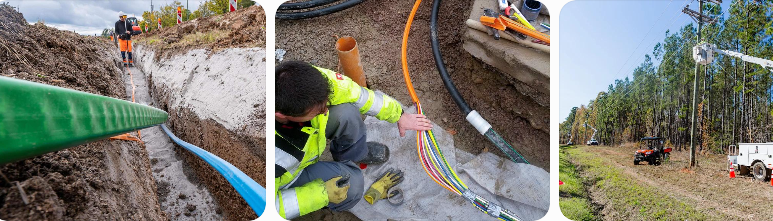
1.Underground Telecommunication Networks
Steel tape and steel wire armored cables are commonly used in underground networks, cable trenches, and direct-burial installations.
2.Rural Broadband Networks
Rural broadband cables often pass through agricultural land, villages, and forests where rodents may damage conventional optical cables.
Anti-rodent protection helps reduce cable failures and maintenance requirements.
3.Highway and Railway Communication Systems
Fiber optic cables installed along highways and railways may be exposed to rodents living in surrounding vegetation or underground areas.
Suitable armored cables can help protect communication infrastructure along these routes.
4.Power Transmission Projects
ADSS anti-rodent optical cables may be used along overhead power transmission corridors where rodents or squirrels present a risk to exposed communication cables.
Non-metallic cable structures are particularly useful where electrical insulation is required.
7. Frequently Asked Questions
Q1. What is anti-rodent fiber optic cable?
Anti-rodent fiber optic cable is an optical cable designed with additional protective structures or materials to reduce damage caused by rodents chewing the cable sheath and reaching the optical fibers.
Q2. What are the main anti-rodent protection methods?
The 3 main methods are chemical deterrence, physical stimulation using materials such as glass yarn or FRP, and armor protection using metallic or non-metallic protective layers.
Q3. Is steel tape armored fiber optic cable rodent-proof?
Steel tape armor provides additional physical protection against rodent chewing. However, its effectiveness depends on the cable structure and sheath integrity. Damaged or exposed steel tape may corrode over time, so it should not be considered completely rodent-proof.
Q4. What is the difference between steel tape and steel wire armored optical cable?
Steel tape armored cable uses a layer of steel tape around the cable core, while steel wire armored cable uses steel wires arranged around the core. Steel wire armor generally provides a more substantial protective structure and may offer higher tensile strength, depending on the design.
Q5. Is FRP armored optical cable suitable for anti-rodent applications?
Yes. FRP armor provides a non-metallic physical barrier that can improve rodent resistance. It is also lightweight and corrosion-resistant. The actual protection level should be verified through the manufacturer’s specifications and test reports.
Q6. Can anti-rodent fiber optic cable be used for direct burial?
Yes. Steel tape armored and steel wire armored optical cables are commonly used for direct-burial applications. FRP armored cables may also be suitable when their mechanical and environmental performance meets the project requirements.
Q7. Can anti-rodent fiber optic cable be used for aerial installation?
Yes. Specialized anti-rodent ADSS cables can be designed for aerial installation. Buyers should confirm span length, tensile strength, sag, wind loading, and electrical clearance requirements.
Post time: Nov-25-2026