
Armored vs Unarmored Fiber Optic Cable: Key Differences, Applications, and How to Choose
Armored and unarmored fiber optic cables are widely used in modern communication networks, but they are designed for very different installation environments and protection requirements. Choosing the wrong type can lead to higher installation costs, cable damage, or long-term network instability. We Jiahome will provide a comprehensive comparison of armored vs unarmored fiber optic cables, covering structure, performance, applications, advantages, limitations, and selection guidelines to help engineers, project managers, and buyers make informed decisions. As a professional fiber optic cable manufacturer, Jiahome shares practical insights based on real-world deployment experience. CONTACT US NOW IF YOU ARE INTERESTED IN THE FIBER OPTIC CABLE.
What Is an Armored Fiber Optic Cable?
An armored fiber optic cable includes a protective metal or non-metal armor layer that enhances mechanical strength and resistance to external damage.
Armored fiber optic cables are designed to withstand harsh environments where physical protection is critical. The armor layer—commonly steel tape, aluminum tape, or corrugated steel—acts as a barrier against rodents, crushing forces, moisture, and impact.
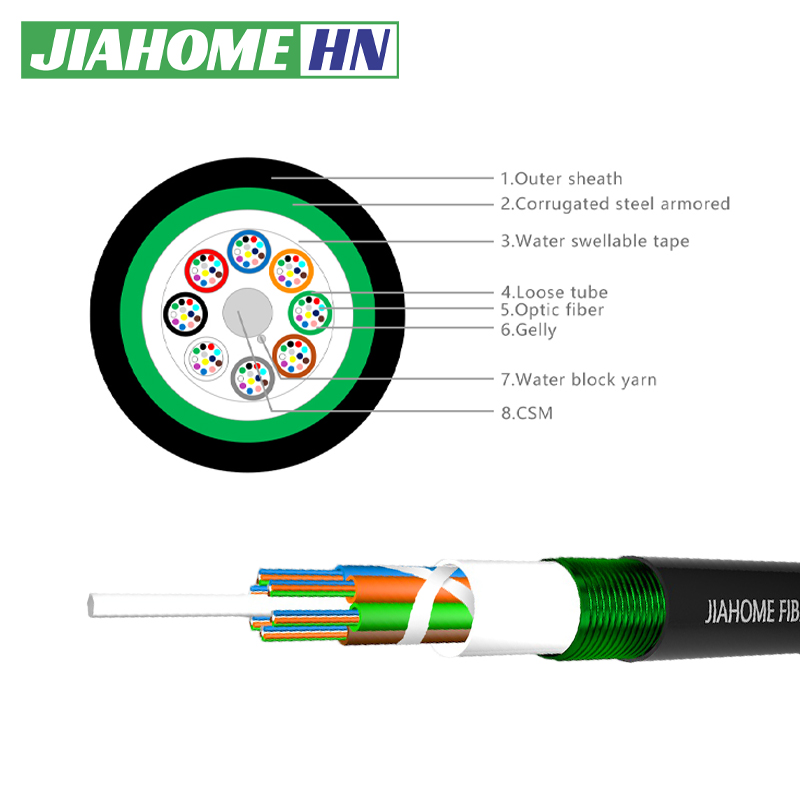
Key features of armored fiber optic cables
-
High tensile and crush resistance
-
Strong rodent and pest protection
-
Suitable for direct burial and harsh outdoor environments
-
Longer service life in challenging conditions
Common armored cable structures include:
-
Steel tape armored fiber optic cable
-
Corrugated steel armored cable
-
Double armored fiber optic cable (for extreme environments)
What Is an Unarmored Fiber Optic Cable?
An unarmored fiber optic cable does not include a metal armor layer and relies on its jacket and strength members for protection.
Unarmored fiber optic cables are lightweight, flexible, and easy to install. They are typically used in controlled environments where the risk of mechanical damage is low.
Key features of unarmored fiber optic cables
-
Smaller diameter and lighter weight
-
Easier handling and installation
-
Lower material and installation cost
-
Ideal for indoor and protected outdoor use
Unarmored cables are commonly found in:
-
Indoor fiber optic networks
-
Data centers and equipment rooms
-
Aerial installations with messenger wire support
Structural Differences Between Armored and Unarmored Fiber Cables
The primary structural difference is the presence or absence of an armor layer, which directly affects durability, flexibility, and cost.
| Feature | Armored Fiber Optic Cable | Unarmored Fiber Optic Cable |
|---|---|---|
| Armor layer | Steel or aluminum | None |
| Mechanical protection | Very high | Moderate |
| Cable weight | Heavier | Lighter |
| Flexibility | Lower | Higher |
| Installation complexity | Higher | Easier |
| Typical cost | Higher | Lower |
The armor layer increases protection but also adds stiffness and weight, which must be considered during installation planning.
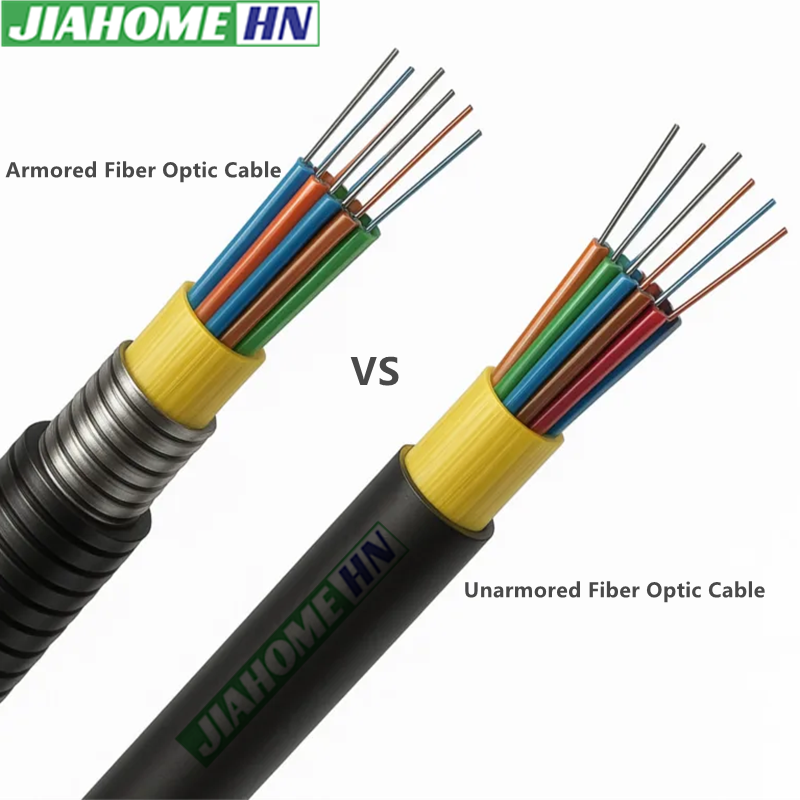
Application Scenarios: Where Each Type Is Used
Armored cables are used in harsh environments, while unarmored cables are preferred in controlled or protected installations.
Typical applications of armored fiber optic cables
-
Direct burial fiber optic cable installations
-
Underground duct systems with high risk of damage
-
Industrial zones and railway corridors
-
Areas with rodent activity
-
Long-term outdoor infrastructure projects
Typical applications of unarmored fiber optic cables
-
Indoor building networks
-
Data centers and telecom rooms
-
Aerial fiber optic cable installations
-
Short-distance protected outdoor routes
As a leading fiber optic cable manufacturer, Jiahome often recommends armored fiber optic cables for outdoor and underground projects, while unarmored cables remain the most cost-effective solution for indoor and aerial deployments.
Performance and Durability Comparison
Armored fiber cables offer superior mechanical durability, while unarmored cables excel in flexibility and ease of deployment.
Armored cables provide:
-
Better resistance to crushing and impact
-
Improved environmental protection
-
Lower risk of accidental damage
Unarmored cables provide:
-
Faster installation
-
Easier routing in tight spaces
-
Reduced load on cable trays and supports
From a transmission perspective, both types can deliver identical optical performance when using the same fiber type (such as G.652.D or G.657).
Cost Considerations: Armored vs Unarmored Fiber Cable
Armored fiber optic cables cost more upfront but can reduce long-term maintenance and repair expenses.
Factors influencing cost include:
-
Armor material type
-
Cable diameter and weight
-
Installation method and labor cost
-
Project lifespan and maintenance expectations
In high-risk environments, armored fiber optic cables often provide better long-term value despite higher initial investment.
How to Choose Between Armored and Unarmored Fiber Optic Cable
The choice depends on installation environment, mechanical risk, budget, and long-term reliability requirements.
Selection checklist
-
Will the cable be buried directly or exposed to physical hazards?
-
Is rodent damage a concern?
-
Is installation space limited or complex?
-
What is the project budget and lifespan?
If protection and durability are priorities, armored fiber optic cable is the safer choice. If flexibility and cost efficiency matter more, unarmored cable is usually sufficient.
Jiahome provides customized armored and unarmored fiber optic cable solutions based on specific project requirements, ensuring optimal performance and cost balance.
FAQ: Armored vs Unarmored Fiber Optic Cable
1. What is the main difference between armored and unarmored fiber optic cable?
The main difference is the armor layer. Armored cables include metal protection, while unarmored cables do not.
2. Can unarmored fiber optic cable be used outdoors?
Yes, unarmored fiber optic cables can be used outdoors if installed in protected environments such as ducts or aerial systems.
3. Is armored fiber optic cable rodent-proof?
Armored fiber optic cables provide strong resistance to rodent damage but are not completely rodent-proof in extreme conditions.
4. Does armored fiber optic cable affect signal quality?
No. Armor does not affect optical performance; signal quality depends on the fiber type and installation quality.
5. Which fiber optic cable is better for direct burial?
Armored fiber optic cable is generally recommended for direct burial installations.
Post time: Jan-19-2026