
As modern data centers migrate from 10G to 400G, 800G, and AI-driven network architectures, MPO fiber optic solutions have become the preferred choice for high-density, high-performance optical cabling. MPO systems integrate multiple optical fibers into a single connector, enabling faster deployment, simplified cable management, lower installation costs, and seamless scalability.
A complete MPO solution typically includes MPO trunk cables, MPO patch cords, MPO cassettes, MPO patch panels, adapters, breakout cables, and accessories. Selecting the correct fiber count, polarity, connector gender, insertion loss level, and fiber type is essential for ensuring network reliability and future expansion.
Now, Hunan Jiahome will explains everything engineers, EPC contractors, distributors, and data center operators need to know about MPO fiber optic solutions—from basic concepts to product selection, installation, testing, maintenance, and purchasing recommendations.
What is MPO?
MPO (Multi-Fiber Push-On) is a high-density fiber optic connector capable of terminating multiple optical fibers in a single ferrule. Compared with traditional duplex LC connectors, MPO significantly increases fiber density while reducing installation time and cable congestion.
The rapid growth of cloud computing, hyperscale data centers, AI clusters, and high-speed Ethernet has created an increasing demand for cabling systems that support higher bandwidth without requiring additional rack space. MPO technology addresses this challenge by combining multiple fibers into one compact connector.
Unlike traditional single-fiber connectors, an MPO connector contains precision guide pins, alignment holes, and a multi-fiber ferrule that accurately aligns all optical fibers simultaneously.
Typical fiber counts include:
| Fiber Count | Common Application |
|---|---|
| 8 Fiber | 40G / 400G Ethernet |
| 12 Fiber | Most common data center deployment |
| 16 Fiber | 400G SR8 |
| 24 Fiber | Backbone cabling |
| 32+ Fiber | Ultra-high-density applications |
Because dozens of fibers are terminated simultaneously, MPO installation is considerably faster than terminating multiple LC connectors individually.
Why MPO Matters in Modern Data Centers?
MPO technology enables higher fiber density, faster deployment, lower labor costs, and easier migration to higher-speed networks such as 100G, 400G, and 800G Ethernet.
Today’s data centers face several challenges:
- Increasing server density
- Limited rack space
- AI computing clusters
- Higher transmission bandwidth
- Faster deployment schedules
Traditional duplex cabling cannot efficiently support thousands of optical connections inside modern hyperscale facilities.
MPO systems solve these problems by reducing cable bulk while dramatically increasing fiber capacity.
Benefits of MPO Cabling?
High Density
One MPO connector can replace multiple duplex connectors, allowing more fibers to fit within the same rack unit.
Faster Installation
Factory-terminated MPO assemblies eliminate field termination, reducing installation time by up to 80%.
Better Cable Management
Smaller cable bundles improve airflow and simplify routing inside cabinets.
Scalability
Networks can migrate from:
- 10G
- 25G
- 40G
- 100G
- 200G
- 400G
- 800G
without replacing the entire structured cabling system.
Lower Total Cost
Although MPO assemblies may have a higher initial purchase price, they typically reduce total project costs by minimizing labor, shortening deployment schedules, and lowering maintenance requirements.
MPO Product:
A complete MPO solution consists of several interconnected products. Each component serves a specific role within the structured cabling system.
MPO Trunk Cable
The MPO trunk cable forms the backbone of the entire MPO cabling system.
It connects:
- Patch panel to patch panel
- Distribution area to equipment area
- Main distribution area (MDA)
- Horizontal distribution area (HDA)
Typical features include:
- Factory terminated
- Low insertion loss
- Pulling eye optional
- Indoor/outdoor versions
- Armored versions
- LSZH or OFNP jacket
Common fiber counts include:
- 12F
- 24F
- 48F
- 72F
- 96F
- 144F
MPO Cassette
MPO cassettes convert one MPO connection into multiple LC duplex ports.
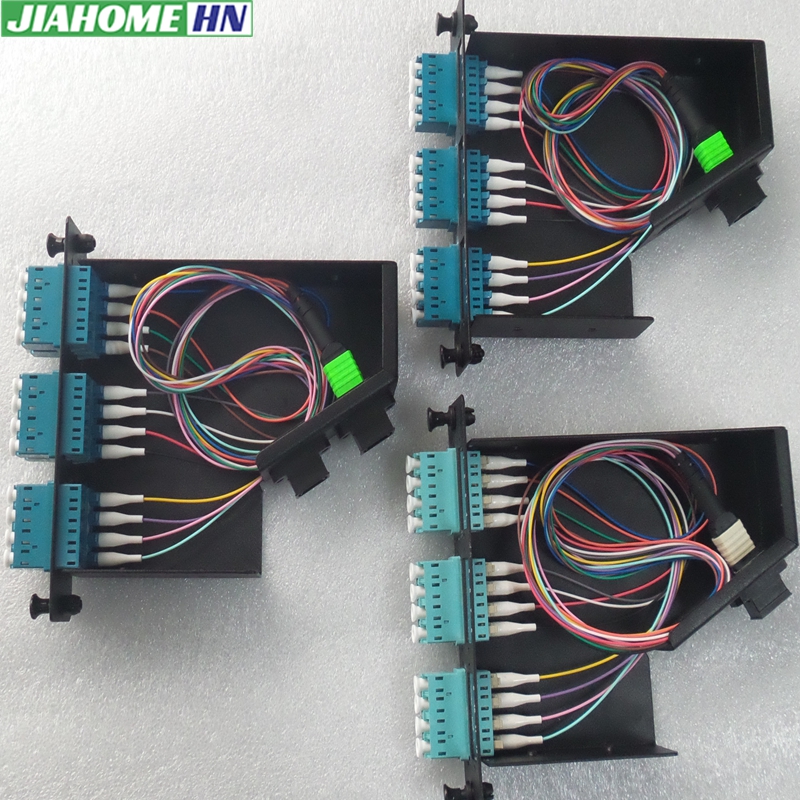
They are widely used inside:
- Patch panels
- Rack enclosures
- Cabinets
Advantages include:
- Easy migration
- Modular replacement
- Front access maintenance
- Better cable organization
Available configurations include:
- Type A
- Type B
- Type C
- Elite Low Loss
- Sliding Cassette
- LGX Cassette
MPO Patch Cord
MPO patch cords connect active equipment to the structured cabling system.
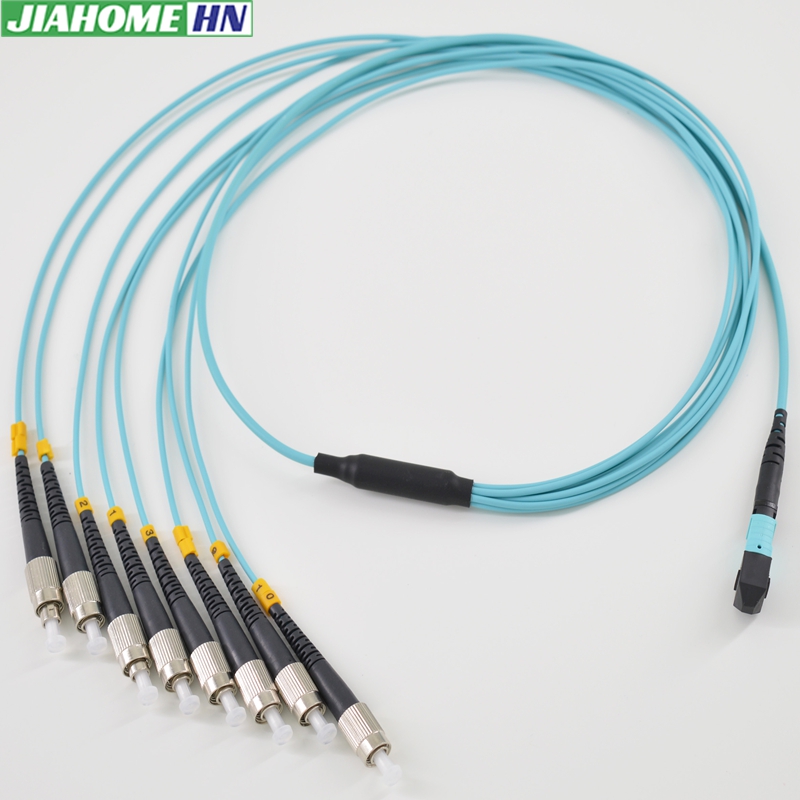
They are available in:
- Male
- Female
- Singlemode OS2
- Multimode OM3
- OM4
- OM5
Connector combinations include:
- MPO-MPO
- MPO-LC
- MPO-SC
Low-loss versions are recommended for high-speed applications such as 400G and 800G Ethernet.
MPO Patch Panel
Patch panels provide centralized management for MPO cabling systems.
Key features:
- High-density design
- Sliding drawer
- Modular cassette support
- Easy maintenance
- Front cable access
They improve cable organization while allowing rapid network expansion.
MPO Adapter
Adapters align two MPO connectors with high precision.
Common types include:
- Key Up to Key Down
- Key Up to Key Up
- Flanged
- Flangeless
Precision alignment minimizes insertion loss and improves connection stability.
MPO Breakout Cable
Breakout cables convert one MPO connector into multiple duplex connectors.
Typical conversions:
- MPO to 4×LC Duplex
- MPO to 6×LC Duplex
- MPO to 8×LC Duplex
These assemblies simplify equipment connections while maintaining high backbone density.
Post time: Jul-29-2026